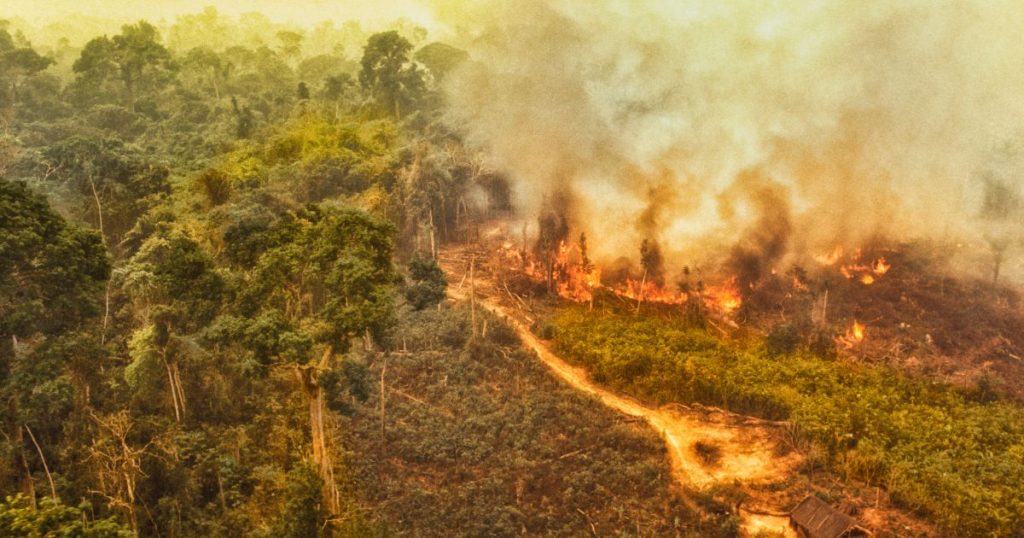
The world is witnessing one of the most devastating environmental disasters as fires continue to ravage vast regions of Bolivia, Brazil, and now Peru, particularly in the Amazon. The destruction of millions of hectares of forest, the displacement of wildlife, and the deterioration of air quality are only some of the visible consequences. The most alarming impact is the threat these fires pose to human health, with towns and cities now shrouded in thick smoke, causing serious respiratory issues for the local populations.
A National and Global Emergency
Bolivia has recently declared a national disaster as fires have scorched more than 7 million hectares of forest, particularly affecting the department of Santa Cruz. Brazil and Peru face similarly dire circumstances as uncontrolled wildfires sweep through their Amazonian regions, collectively forming one of the world’s most crucial ecological lungs. These fires, often caused by illegal land clearing and exacerbated by climate change, not only contribute to deforestation but release vast amounts of carbon dioxide, amplifying global warming.
In these countries, smoke has invaded urban and rural areas alike, resulting in unprecedented public health crises. Residents are struggling with asthma, bronchitis, and other respiratory ailments due to prolonged exposure to hazardous air. For children, the elderly, and individuals with pre-existing conditions, the consequences are even more severe. Despite these dangers, efforts to control the fires remain limited, often hindered by resource shortages, insufficient coordination, and political conflicts.
The Responsibility of Governments
At the heart of this crisis lies the question of governance. Governments in Bolivia, Brazil, Peru, and across the region hold the primary responsibility for protecting their natural resources and ensuring the safety of their populations. Effective environmental policies, investment in fire prevention infrastructure, and sustainable land-use practices are fundamental in preventing such disasters. Unfortunately, inconsistent enforcement of environmental regulations and the prioritization of economic interests over ecological sustainability have exacerbated the current situation.
International pressure has mounted for these countries to take decisive action, but local governments must rise to the challenge by strengthening their environmental frameworks. This includes ramping up fire control efforts, implementing reforestation programs, and supporting vulnerable communities with emergency healthcare services.
The Role of Non-Profits: A Call for Collective Action
In the face of government challenges, non-profits play a critical role in filling gaps and supporting affected populations. Non-profits also provide crucial humanitarian assistance, including medical supplies for communities affected by the smoke and air quality degradation.
Moreover, non-profits are pivotal in ensuring that the voices of indigenous communities—those who have lived in harmony with these ecosystems for centuries—are heard. These groups often bear the brunt of environmental degradation, and their traditional knowledge can offer invaluable insights into sustainable land management.
As non-profits, we must call on governments to address the root causes of these fires. This includes regulating land-use practices, improving enforcement against illegal deforestation, and promoting sustainable agriculture. We also need to support environmental education programs that empower local communities to engage in conservation efforts.
U4C’s Statement: Together for a Sustainable Future
At United4Change Center (U4C), we stand in solidarity with the communities affected by the fires in Bolivia, Brazil, and Peru. We recognize that these environmental disasters are not isolated incidents but part of a broader pattern of ecological harm caused by human activities and climate change. We call on governments, international organizations, and civil society to take immediate action to prevent further devastation.
The fires in Bolivia, Brazil, and Peru are not just regional concerns—they are global emergencies. We urge leaders to collaborate on innovative solutions that prioritize environmental protection, public health, and the well-being of future generations. Non-profits, businesses, and individuals must also contribute by supporting reforestation efforts, promoting renewable energy, and advocating for stronger environmental regulations.
Together, we can work toward a more sustainable future, where the Amazon and other vital ecosystems are preserved for generations to come.

Daniel Murillo
Community Development Coordinator, U4C